What is an adjustable-rate mortgage? An ARM has a lower fixed rate for the first few years, then adjusts up or down based on the market. It can lower your starting payment, but you need a plan for when the rate resets.
When rates climb, buying a home can feel like chasing a moving target. Every rate increase makes the monthly payment bigger, so more buyers are looking for another way in.
A growing number are finding it in the adjustable-rate mortgage, or ARM.
How an ARM Works
With a fixed-rate mortgage, your rate stays the same for the life of the loan. With an ARM, your rate is locked for the first few years, then it can move up or down with the market.
Some buyers don't like that uncertainty, and that's okay. Others choose an ARM because the starting rate is usually lower.
Bankrate found that in September, ARM rates were more than a full percentage point below fixed rates. Nationally, that can mean $150 to $300 less per month on a median-priced home. In a higher-priced market like San Diego County, the dollar difference can be larger.
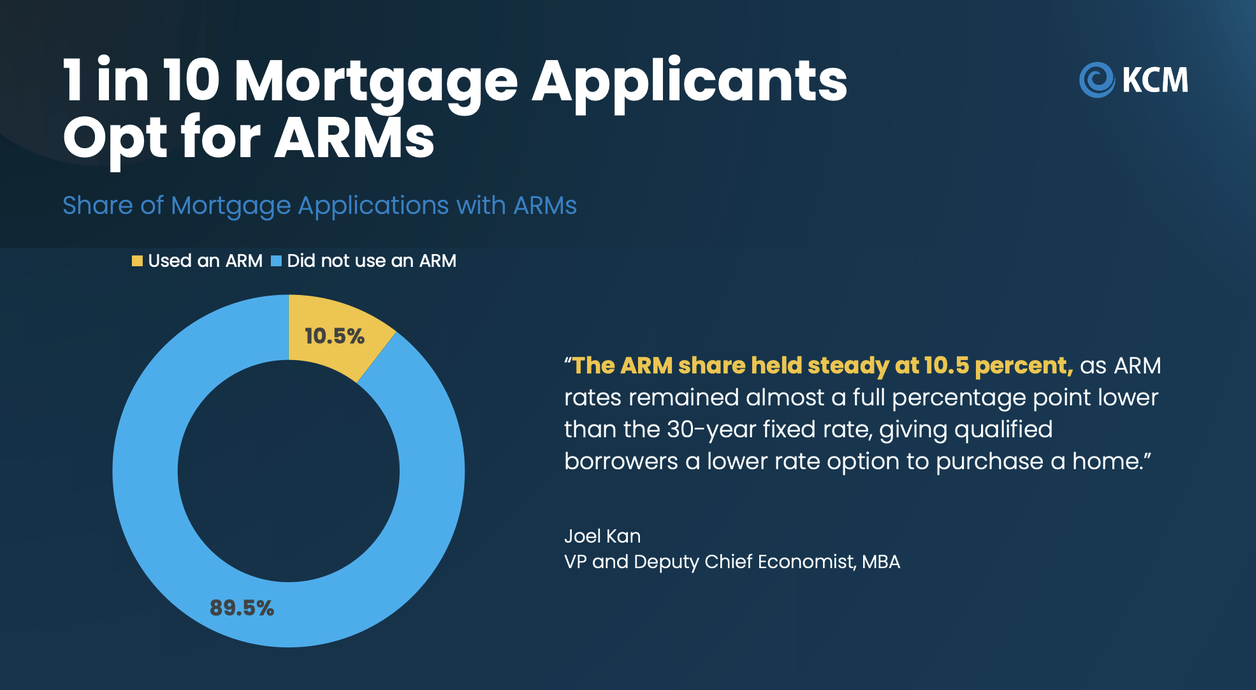
For some buyers, that's enough to turn "not yet" into "let's do it." According to the Mortgage Bankers Association, roughly 1 in 10 mortgage applicants in October chose an ARM.
The 5/1 ARM, Explained
Think of an ARM like a phone plan with an introductory rate. You start lower, and the price adjusts after a set period.
One of the most popular options is the 5/1 ARM:
The 5 means your starting rate is locked for five years.
The 1 means the rate can change once a year after that.
That change is called the reset. When it happens, your payment could go up or down. Most ARMs have caps that limit how much the rate can rise each year and over the life of the loan. Either way, you need to be ready.
Pros and Cons to Discuss with Your Lender
Potential upsides:
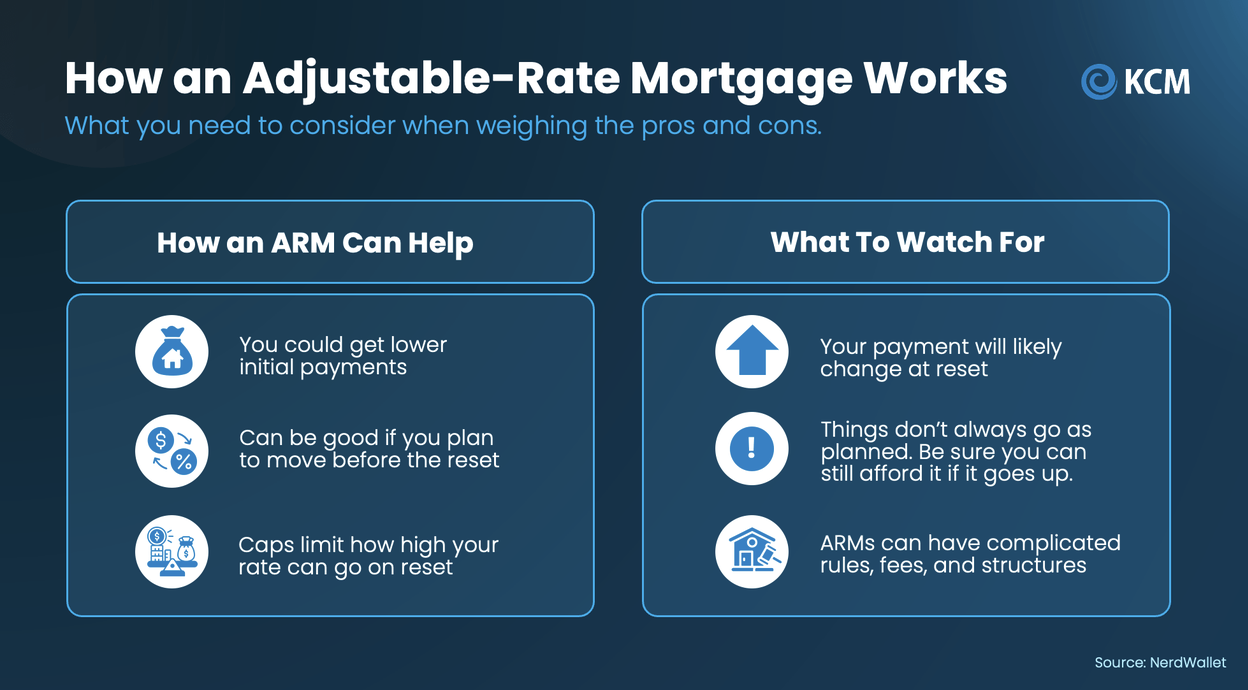
Lower starting rate and monthly payment
Can help you qualify for more home, or get in sooner
A good fit if you expect to move or refinance within the fixed period
Potential downsides:
Your payment could rise after the reset
Less predictability for long-term budgeting
Refinancing later isn't guaranteed
If you expect to move in a few years, an ARM may line up well with your timeline. That's often true for military families in San Diego County who know a new set of orders is coming.
Before you decide, ask your lender to run the numbers and walk you through different scenarios. Go in with your eyes open.
Have a Plan for the Reset
When your rate resets, you'll have options:
Keep the loan if the new payment still fits your budget.
Refinance into a fixed-rate loan with a payment that never changes.
Refinance into another ARM with a new locked rate.
Sell your home.
Talk to your loan servicer about assistance or a modification.
Remember, a refinance is a brand-new loan you'll need to qualify for. Keep your credit and finances in good shape, and check with your loan officer before big moves like a job change or a major purchase.
Today's ARMs Aren't 2008's ARMs
ARMs got a bad reputation after the 2008 crisis. Back then, some loans had tiny starting payments that later shot up, and some didn't require proof of income.
That's changed. Under the Ability-to-Repay Rule, lenders must verify your income with real documents like pay stubs, W-2s, and tax returns. They also have to consider what your payment could be after the reset, not just the starting payment.
Today's ARMs are not the same loans we saw before the crash.
Frequently Asked Questions
Is an ARM a good idea right now?
It can be, especially if you plan to move or refinance within the fixed period. A lender can compare ARM and fixed-rate scenarios for your situation.
What happens when an ARM resets?
Your rate adjusts based on the market, so your payment can go up or down. Caps limit how much it can change.
Are ARMs risky like they were in 2008?
Today's ARMs are subject to the Ability-to-Repay Rule, which requires lenders to verify income and consider the payment after the reset.
Explore Your Options
Today's market has more options than many people realize. If you're wondering whether an ARM could help you buy in San Diego County, talk to a trusted lender about the numbers. If you need a lender recommendation or want to talk through your home search, call or text me.
Billie Bourgeois | REALTOR® Real Broker | San Diego County, CA DRE# 01703336